Planning a Construction Project? A Tree Management Plan Could Be One of Your Most Important Documents
Whether you’re building a new home, adding an extension, developing commercial property, or subdividing land, protecting existing trees is often an important part of the planning process. In many parts of Australia, local councils require developers and property owners to demonstrate how valuable trees will be managed before construction begins.
If you’ve been searching for a Tree Management Plan, you’re probably trying to understand what it involves, why councils request it, and whether your project requires one. The good news is that a well-prepared Tree Management Plan not only helps satisfy planning requirements but also reduces construction risks and protects significant trees throughout the project.
This guide explains everything Australian homeowners, builders, and developers need to know about Tree Management Plans, including what they contain, when they’re needed, and how they contribute to smoother council approvals and construction outcomes.
Quick Overview
At a Glance
Here’s the short version if you’re in a hurry.
- A Tree Management Plan outlines how trees will be protected during construction.
- It often forms part of council planning and development applications.
- The plan identifies Tree Protection Zones (TPZs) and recommended protection measures.
- Following the plan helps minimise tree damage and project delays.
- Early planning benefits both your development and the surrounding environment.
Want to understand how a Tree Management Plan protects both your project and valuable trees? Keep reading.
What Is a Tree Management Plan?
A Tree Management Plan (TMP) is a professional document that outlines how existing trees will be managed before, during, and after construction activities.
Rather than focusing solely on the condition of trees, the plan provides practical guidance for protecting them while nearby works are carried out.
A typical Tree Management Plan may include:
- Tree identification and location
- Tree Protection Zones (TPZ)
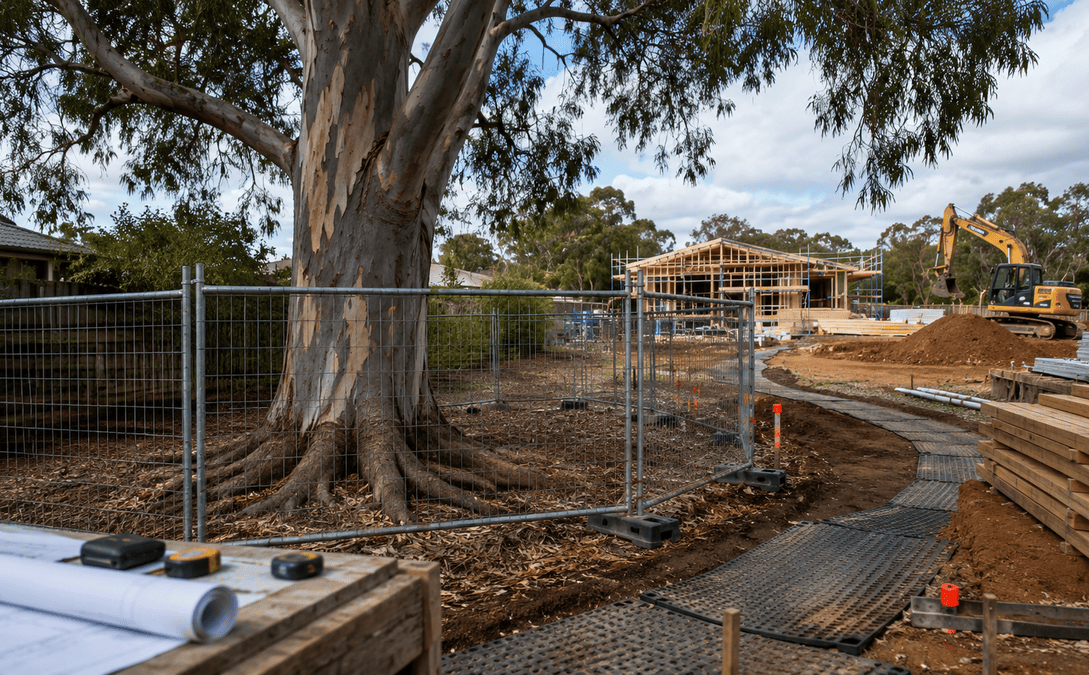
- Recommended protective fencing
- Root protection strategies
- Construction exclusion zones
- Approved access routes
- Monitoring recommendations
- Site management procedures
In simple terms, it’s the rulebook that helps builders and contractors work around trees without accidentally turning them into expensive firewood.
Why Is a Tree Management Plan Important?
Construction activities can unintentionally damage trees in ways that aren’t immediately visible.
Common risks include:
- Soil compaction
- Root damage
- Trunk injuries
- Branch breakage
- Changes to drainage
- Heavy machinery operating too close
Even minor root damage can affect a tree’s long-term health.
A Tree Management Plan helps minimise these risks by providing clear instructions before work begins.
Expert Insight: Tree damage often occurs below ground, where roots cannot be seen. Prevention is significantly easier than remediation.
When Might You Need a Tree Management Plan?
Although requirements vary between councils, Tree Management Plans are commonly requested for developments involving existing trees.
Examples include:
- Building new homes
- Residential extensions
- Multi-unit developments
- Commercial construction
- Subdivisions
- Swimming pool installations
- Driveway construction
- Large landscaping projects
Many projects require both an Arborist Report and a Tree Management Plan, with the report assessing the trees and the management plan explaining how they will be protected.
Did You Know?
Tree roots often extend much further than the visible canopy. Protecting only the trunk isn’t enough if heavy machinery is compacting the surrounding soil.
What Does a Tree Management Plan Include?
Every project is different, but most professional Tree Management Plans contain several key components.
Tree Protection Zones
The Tree Protection Zone (TPZ) identifies the area around each tree that should remain protected throughout construction.
Protection Fencing
Temporary fencing helps prevent vehicles, machinery, and materials from entering sensitive areas.
Site Access Planning
The plan identifies where workers, equipment, and vehicles should safely travel.
Construction Recommendations
Specific instructions may include:
- No excavation within the TPZ
- No material storage beneath trees
- Controlled pruning where required
- Alternative service routes
- Supervised works near sensitive roots
Ongoing Monitoring
Some developments require regular inspections to ensure protective measures remain effective throughout construction.
Benefits of Having a Professional Tree Management Plan
Preparing a Tree Management Plan early offers several advantages.
Better Council Compliance
Councils appreciate well-prepared documentation that clearly addresses tree protection.
Reduced Construction Risks
Clear instructions minimise accidental damage.
Cost Savings
Avoiding tree damage can prevent expensive remediation work or enforcement action.
Environmental Protection
Healthy mature trees provide shade, habitat, and long-term environmental value.
Greater Project Certainty
Builders understand exactly where they can and cannot work.
Good planning protects both your investment and Australia’s urban canopy.
Pro Tip
Share your Tree Management Plan with everyone working on site, including contractors, landscapers, and equipment operators. A document hidden in a filing cabinet won’t protect a single tree.
Quick Guide: Preparing for a Tree Management Plan
If your project involves established trees, taking a few early steps can make the planning process much smoother.
Common Challenges
- Are large trees located close to your proposed construction area?
- Has your council requested tree protection documentation?
- Are you unsure how construction could affect nearby trees?
Practical Solutions
Arrange an Arborist Assessment Early
Early advice helps identify potential issues before designs are finalised.
Provide Accurate Site Plans
Detailed plans allow tree protection measures to be tailored to your project.
Protect Tree Roots Before Work Begins
Installing fencing before machinery arrives significantly reduces accidental damage.
Educate Everyone on Site
Builders and subcontractors should understand the Tree Protection Zones before construction starts.
Why It Works
Early planning reduces uncertainty, protects valuable trees, and keeps construction moving with fewer interruptions.
Interactive Quiz: Does Your Project Need a Tree Management Plan?
Answer Yes or No.
✅ Are mature trees located within or near your construction area?
✅ Is your project subject to council approval?
✅ Will excavation occur close to existing trees?
✅ Will heavy machinery access the site?
✅ Has an Arborist Report already been requested?
Your Results
0–1 Yes
You may not require a Tree Management Plan, although it’s worth checking local council requirements.
2–3 Yes
Your project may benefit from professional tree protection planning.
4–5 Yes
A Tree Management Plan is likely to be an important part of your development documentation.
Quick Survey
Which part of protecting trees during construction seems most challenging?
- Understanding Tree Protection Zones
- Meeting council requirements
- Protecting tree roots
- Coordinating builders around trees
- Knowing when professional advice is needed
Every project is different, but early planning almost always makes the process simpler.
Frequently Asked Questions
Is a Tree Management Plan the same as an Arborist Report?
Not quite.
An Arborist Report assesses the health and condition of trees, while a Tree Management Plan explains how those trees should be protected during construction.
Many developments require both documents.
Who prepares a Tree Management Plan?
Tree Management Plans are generally prepared by qualified consulting arborists with experience in development planning and tree protection.
Professional advice helps ensure recommendations meet industry standards and council expectations.
Can I change the Tree Management Plan once construction begins?
Sometimes.
If project conditions change, updated recommendations may be required. Significant changes should be discussed with the consulting arborist before proceeding.
What happens if trees are damaged during construction?
Depending on council requirements, consequences may include:
- Stop-work directions
- Additional inspections
- Remediation requirements
- Financial penalties
- Delays to project completion
Protecting trees from the beginning is usually the simplest and most cost-effective approach.
Does every project require a Tree Management Plan?
No.
Smaller projects without nearby trees may not require one. However, developments involving established or protected trees often benefit from professional assessment.
Conclusion
A Tree Management Plan is much more than a planning document. It provides practical guidance that helps protect valuable trees while allowing construction to proceed safely and efficiently. By identifying Tree Protection Zones, recommending protective measures, and supporting council applications, the plan reduces risks for homeowners, builders, and developers alike. Whether you’re planning a renovation, subdivision, commercial development, or new home, preparing a professional Tree Management Plan early can save time, minimise unexpected issues, and contribute to better environmental outcomes. Protecting mature trees today helps preserve Australia’s landscapes for future generations while keeping your project moving in the right direction.