uying a home is exciting, but it’s also a decision that deserves careful investigation. A property may look spotless during an open inspection, yet hidden structural defects or termite activity could be lurking behind freshly painted walls or beneath the floor. These unseen problems can quickly turn your dream home into an expensive renovation project.
If you’ve been searching for Combined Building & Pest Inspections, you’re likely looking for a practical way to understand a property’s true condition before committing to the purchase. A combined inspection offers the convenience of assessing both the building’s structural integrity and the presence of timber pests in a single visit.
This guide explains what Combined Building & Pest Inspections involve, why they’re valuable for Australian property buyers, and how they can help you make a confident, informed decision before settlement.
Quick Overview
Here’s the short version if you’re short on time.
- Combined Building & Pest Inspections assess both structural issues and timber pest activity.
- A single inspection is often more convenient than booking separate services.
- Reports can uncover hidden defects before they become expensive repairs.
- Findings may help buyers negotiate repairs or the purchase price.
- Inspections provide greater confidence before signing contracts.
Want to understand what inspectors actually look for? Keep reading!
What Are Combined Building & Pest Inspections?
As the name suggests, Combined Building & Pest Inspections combine two essential property assessments into one comprehensive inspection.
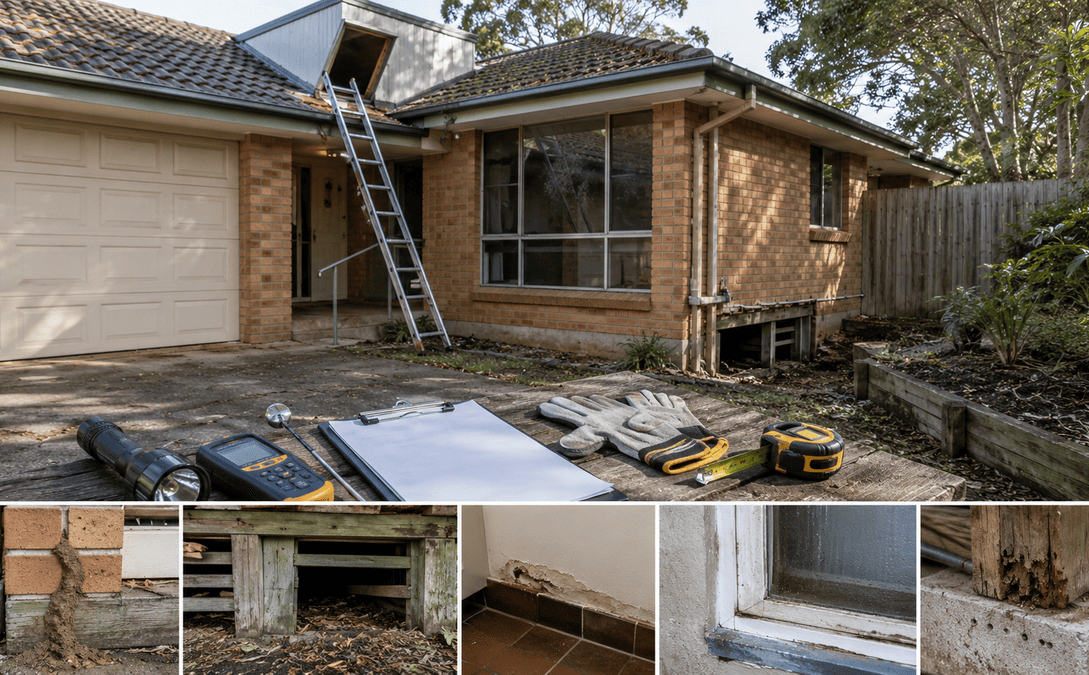
The building inspection focuses on the visible condition of the property’s structure, while the pest inspection looks for signs of timber pests, particularly termites, as well as conditions that may encourage future infestations.
Together, they provide a broader understanding of the property’s condition than either inspection alone.
Typical inspection areas include:
- Roof space
- Exterior walls
- Foundations
- Floors and subfloors
- Ceilings
- Bathrooms
- Kitchens
- Garages
- Outdoor structures
- Fencing (where accessible)
- Timber framing
- Garden areas near the house
Think of it like taking your car for both a mechanical inspection and a roadworthy test. One checks how it’s built, while the other looks for hidden problems that could cause major headaches later.
Why Home Buyers Choose Combined Inspections
For many Australian buyers, convenience is only part of the benefit.
A combined inspection also helps create a more complete picture of the property’s condition.
Some advantages include:
- One inspection appointment
- One detailed report (or coordinated reports)
- Faster decision-making
- Better understanding of repair priorities
- Greater confidence before settlement
When buying a property worth hundreds of thousands of dollars, investing in a thorough inspection is often one of the smallest costs involved.
Did You Know?
Termites cause millions of dollars in property damage across Australia every year. Many affected homes are not covered by standard home insurance for termite damage, making early detection particularly important.
What Does the Building Inspection Cover?
The building component focuses on identifying visible defects and maintenance concerns.
Inspectors commonly assess:
Structural Elements
- Foundations
- Load-bearing walls
- Roof framing
- Flooring
Exterior
- Brickwork
- Cladding
- Gutters
- Downpipes
- Drainage
Interior
- Walls
- Ceilings
- Doors
- Windows
- Moisture signs
- Ventilation
The goal isn’t to find a “perfect” home. Instead, it’s to identify issues that could affect safety, maintenance costs, or long-term value.
What Does the Pest Inspection Cover?
The pest inspection primarily focuses on timber pests, including:
- Active termites
- Previous termite damage
- Conditions attractive to termites
- Timber decay
- Excess moisture
- Poor ventilation
- Wood-to-soil contact
Inspectors also identify environmental conditions that increase the likelihood of future infestations.
Early detection can make an enormous difference because termite damage often develops quietly before homeowners notice anything unusual.
Common Issues Found During Combined Building & Pest Inspections
Every property is different, but inspectors frequently identify:
- Minor settlement cracks
- Roof leaks
- Dampness
- Rotten timber
- Blocked subfloor ventilation
- Poor drainage
- Damaged gutters
- Timber decay
- Evidence of previous termite treatment
- Conditions favourable to termite activity
Some issues require immediate attention, while others simply become part of future maintenance planning.
Pro Tip
Fresh renovations shouldn’t replace professional inspections.
New paint, polished floors, and modern fixtures can improve presentation, but they don’t guarantee the underlying structure is free from defects.
Always rely on professional assessments rather than appearances alone.
Quick Guide: Making the Most of Combined Building & Pest Inspections
Imagine you’ve found a property that ticks every box. Before signing the contract, you arrange a combined inspection to better understand what you’re buying.
Common Challenges
- Could hidden termite damage affect the property’s value?
- Are those ceiling cracks cosmetic or structural?
- Should you negotiate if repairs are recommended?
How to Solve It
Read the Summary First
Start with the report’s major findings before reviewing minor maintenance items.
Ask Questions
If technical language seems confusing, ask your inspector to explain it in everyday terms.
Compare Repair Priorities
Separate urgent repairs from routine maintenance so you can budget realistically.
Use the Findings Wisely
Inspection reports often support informed negotiations without creating unnecessary alarm.
Why It Works
Understanding the property’s strengths and weaknesses allows buyers to make balanced decisions instead of relying on assumptions or emotions. Knowledge reduces uncertainty and helps buyers plan ahead with greater confidence.
Expert Insight
“A good inspection isn’t about finding reasons not to buy a property. It’s about giving buyers the information they need to make confident decisions.”
That perspective helps explain why many experienced buyers never skip inspections, regardless of how attractive a property appears.
Should You Be Worried About Every Defect?
Not necessarily.
Every home, especially older Australian properties, will have some wear and tear.
Focus on:
✅ Major structural concerns
✅ Active termite activity
✅ Safety hazards
✅ Water intrusion
Less urgent cosmetic issues can usually be addressed over time.
The inspection helps distinguish between ordinary ageing and significant concerns.
Quick Buyer Quiz
How prepared are you for your next property purchase?
1. Can termites be present without obvious visible damage?
- A) No
- B) Yes ✅
2. Do Combined Building & Pest Inspections replace every specialist inspection?
- A) Yes
- B) No ✅
3. Should you ignore moisture problems because they’re “just cosmetic”?
- A) Yes
- B) No ✅
4. Can inspection reports help during price negotiations?
- A) Yes ✅
- B) No
Your Score
- 4 correct: You’re inspection-ready.
- 2-3 correct: You’re well on your way.
- 0-1 correct: Better to learn from this quiz than from an unexpected repair bill.
Frequently Asked Questions
Are Combined Building & Pest Inspections worth it?
For many buyers, yes.
Instead of relying on appearances alone, inspections provide professional observations that can reveal issues before settlement.
How long does a combined inspection usually take?
Most inspections take between two and four hours, depending on:
- Property size
- Accessibility
- Building age
- Overall condition
Can inspectors see inside walls?
Generally, no.
Building and pest inspections are non-invasive, meaning inspectors assess visible and accessible areas unless otherwise arranged.
What happens if termites are found?
Finding termites doesn’t automatically mean you should abandon the purchase.
Instead, buyers often:
- obtain specialist advice,
- estimate treatment costs,
- review repair requirements,
- negotiate where appropriate.
Are newer homes free from defects?
Not always.
Even recently built homes can contain workmanship issues, moisture problems, or maintenance concerns. New construction doesn’t eliminate the value of an independent inspection.
Conclusion
Combined Building & Pest Inspections provide Australian home buyers with valuable information that goes far beyond what can be seen during an open inspection. By assessing both the property’s structural condition and the presence of timber pests, these inspections help uncover hidden issues, identify future maintenance needs, and support informed purchasing decisions. While no inspection can guarantee a completely problem-free property, having a professional report significantly reduces uncertainty and helps buyers approach negotiations with greater confidence. Whether you’re purchasing your first home, upgrading, or investing, a Combined Building & Pest Inspection is a practical step that can protect both your finances and your peace of mind for years to come.