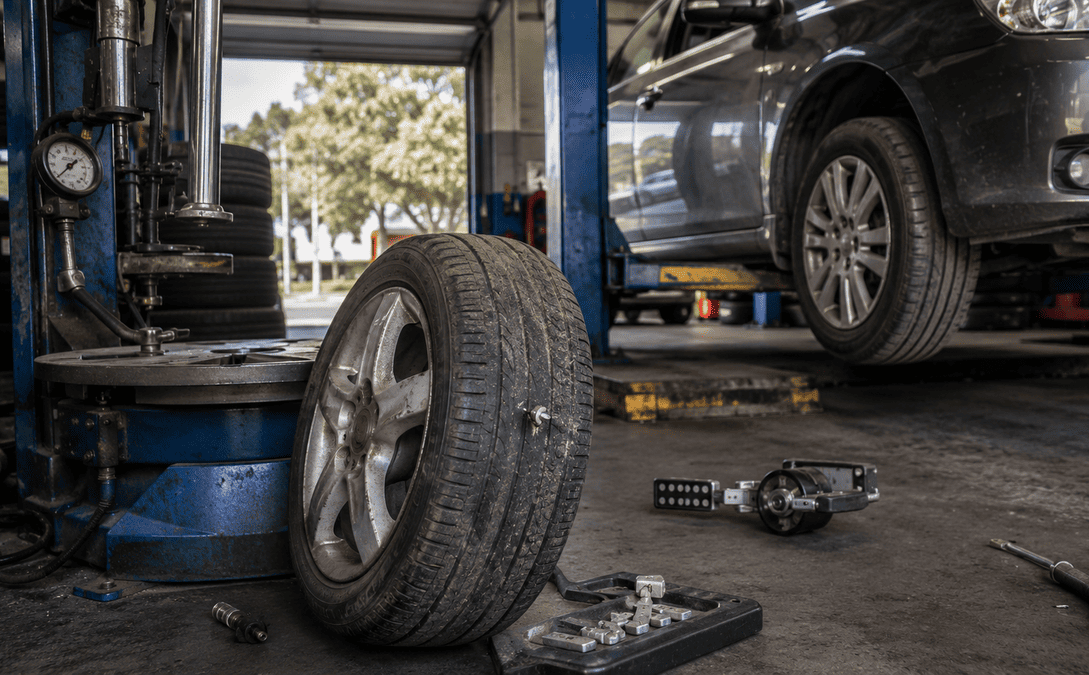
Tyres are easy to ignore when they are doing their job properly. Most drivers only start thinking about them when a warning light appears, the steering wheel begins to shake or one tyre suddenly looks flatter than the others.
However, tyres influence braking, steering, fuel efficiency, ride comfort and overall road safety. Understanding professional tyre services can therefore help Australian drivers recognise problems earlier, avoid unnecessary tyre wear and make better decisions when repairs or replacements are recommended.
This guide explains the main services offered by tyre professionals, when you may need them and what each service is designed to achieve. It is informational rather than promotional, helping everyday drivers understand tyre care without requiring a degree in automotive engineering.
At a Glance
Professional tyre services may include:
- Tyre inspections and pressure checks
- Puncture assessment and repair
- New tyre fitting
- Wheel balancing
- Wheel alignment
- Tyre rotation
- Valve replacement
- Tread and wear-pattern checks
- Advice on selecting suitable tyres
The right service depends on the condition of your tyres, your vehicle type and the symptoms you have noticed while driving. A professional inspection can determine whether a tyre can be repaired, needs replacing or is wearing unevenly because of another issue.
Want to understand what each service actually does? Keep reading.
What Are Professional Tyre Services?
Professional tyre services cover the inspection, maintenance, repair and replacement of tyres and related components.
They are carried out using specialist equipment that helps technicians identify problems that may not be obvious from a quick glance in the driveway. For example, a tyre may look reasonably healthy from the outside but have internal damage, uneven wear or a slow leak.
A technician may examine:
- Tread depth and condition
- Tyre pressure
- Sidewall damage
- Cracks, cuts or bulges
- Puncture location
- Uneven wear patterns
- Tyre age and deterioration
- Wheel balance and alignment
The goal is not simply to sell tyres. It is to determine what your vehicle needs to remain safe and perform correctly.
Tyre Inspections: The Starting Point
A tyre inspection is often the first step in professional tyre services. It allows a technician to assess all tyres before recommending repairs, maintenance or replacement.
During an inspection, the technician may look for signs such as:
- Excessive or uneven tread wear
- Objects embedded in the tyre
- Pressure loss
- Sidewall deterioration
- Damage caused by potholes or kerbs
- Separation or distortion
- Previous repairs
Uneven tyre wear can reveal useful clues. Wear in the centre of the tread may be linked to overinflation, while wear on both outer edges may suggest underinflation. Wear concentrated on one side may indicate an alignment issue.
Pro Tip: Ask the technician to show you the wear or damage. Seeing the issue makes it easier to understand why a service has been recommended.
Puncture Repairs
A punctured tyre does not always need to be replaced. In some cases, it can be professionally repaired.
Whether repair is possible depends on:
- Where the puncture is located
- The size of the damage
- Whether the tyre was driven while flat
- The overall condition of the tyre
- Whether there is internal damage
- Whether the tyre has already been repaired
Damage within the central tread area may sometimes be repairable. Damage near the shoulder or sidewall is more likely to require replacement because these areas flex significantly while driving.
A proper puncture assessment usually involves removing the tyre from the wheel so the inside can be inspected. Simply plugging the visible hole without examining internal damage may not provide a reliable long-term solution.
Unfortunately, tyres do not respond well to the strategy of “put some air in it and see what happens.” They tend to remember the problem.
Tyre Fitting and Replacement
When a tyre is worn, damaged or unsuitable for repair, replacement may be necessary.
Professional tyre fitting involves more than taking off an old tyre and installing a new one. The process may include:
- Removing the wheel from the vehicle
- Taking the old tyre off the rim
- Inspecting the wheel and valve
- Fitting the replacement tyre
- Inflating it to the correct pressure
- Balancing the wheel
- Refitting and tightening the wheel correctly
The technician should also confirm that the new tyre is suitable for the vehicle.
Factors considered may include:
- Tyre size
- Load rating
- Speed rating
- Vehicle type
- Driving conditions
- Manufacturer requirements
- Budget
- Desired comfort or performance
Drivers should avoid choosing tyres based only on price. Wet-weather grip, durability, road noise and handling may all differ between tyre models.
Wheel Balancing
Wheel balancing helps ensure that weight is distributed evenly around the wheel and tyre assembly.
Even a small imbalance can cause vibration, particularly at higher speeds. You may feel this through the steering wheel, seat or floor of the vehicle.
Common signs of wheel imbalance include:
- Steering-wheel vibration
- Vibration that increases with speed
- Uneven tyre wear
- Reduced ride comfort
- Noise from the wheels
During balancing, the wheel is placed on a machine that identifies uneven weight distribution. Small balancing weights are then attached to correct the imbalance.
Did You Know?
Wheel balancing and wheel alignment are different services. Balancing addresses weight distribution around the wheel, while alignment adjusts the direction and angle of the wheels.
Wheel Alignment
Wheel alignment ensures that the wheels sit at the correct angles relative to the road and each other.
Alignment problems may develop after hitting potholes, clipping kerbs, driving regularly on rough roads or replacing suspension components. Sometimes ordinary wear is enough to gradually affect alignment.
You may need an alignment if:
- The vehicle pulls to one side
- The steering wheel is off-centre
- Tyres wear unevenly
- Steering feels less stable
- New tyres are being fitted after unusual wear
- You recently hit a significant pothole
Correct alignment can improve steering behaviour and help tyres wear more evenly.
It also prevents the slightly painful experience of buying new tyres and watching one edge disappear much faster than the rest.
Tyre Rotation
Tyres do not always wear at the same rate. Front tyres may experience different forces from rear tyres because of steering, braking, weight distribution and drivetrain layout.
Tyre rotation involves moving tyres to different positions on the vehicle to encourage more even wear.
The appropriate rotation pattern depends on:
- Whether the vehicle is front-, rear- or all-wheel drive
- Whether the tyres are directional
- Whether different tyre sizes are fitted front and rear
- Manufacturer recommendations
- Current wear patterns
Regular rotation may help extend tyre life, but it cannot correct serious wear caused by incorrect pressure, poor alignment or damaged suspension parts.
Quick Guide: When Your Car Starts Vibrating
Imagine driving on a motorway when the steering wheel begins vibrating. The vehicle still moves normally, but the vibration becomes more noticeable as your speed increases.
Common Challenges
- Is the vibration caused by the tyres or something else?
- Is it safe to continue driving?
- Do you need balancing, alignment or replacement tyres?
How to Handle It
Reduce speed carefully
If the vibration is strong or sudden, slow down and avoid harsh steering or braking.
Inspect the tyres
Look for visible damage, low pressure, bulges or objects in the tread. Do not touch anything that appears sharp.
Arrange a professional inspection
A technician can check tyre condition, pressure, wheel balance and alignment rather than relying on guesswork.
Explain when the vibration occurs
Tell the technician whether it happens at a specific speed, during braking or continuously. This information can help narrow down the likely cause.
Why It Works
Vibration can have several causes, so replacing tyres without diagnosis may not solve the issue. A structured inspection helps identify whether the problem relates to balancing, tyre damage, alignment or another vehicle component.
Noticing new vibration or handling changes? Have the vehicle checked before the symptoms become more severe.
Signs You May Need Professional Tyre Services
Arrange an inspection when you notice:
- A tyre repeatedly losing pressure
- Cracks, cuts or bulges
- Uneven tread wear
- Vibration through the steering wheel
- The vehicle pulling left or right
- Increased road noise
- Reduced grip in wet conditions
- A warning light related to tyre pressure
- Damage after hitting a pothole
- Tyres that appear old or deteriorated
Some tyre problems develop gradually, making them easy to overlook. Regular checks are often less dramatic and less expensive than dealing with a flat tyre beside a busy road.
Quick Tyre Health Quiz
Answer yes or no:
- Do you regularly add air to the same tyre?
- Does your steering wheel vibrate at higher speeds?
- Can you see uneven wear across the tread?
- Does the car pull to one side?
- Have you recently hit a large pothole?
- Are you unsure when the tyres were last inspected?
Your Result
Zero yes answers: Your tyres may be performing normally, but regular visual and pressure checks remain important.
One or two yes answers: Consider booking an inspection before the issue becomes more noticeable.
Three or more yes answers: Professional tyre services may be needed soon, particularly if you can see damage or experience handling changes.
This quiz is a general guide and does not replace a professional vehicle inspection.
Frequently Asked Questions
How often should tyres be professionally inspected?
There is no single schedule that suits every driver. Inspection frequency can depend on how often you drive, road conditions, vehicle use and tyre age.
A check may be particularly useful before long trips, after hitting a pothole or whenever you notice pressure loss, vibration or unusual wear.
Do professional tyre services include tyre pressure checks?
Usually, yes. Tyre pressure is commonly checked during inspections, fitting and maintenance services.
Correct pressure should be based on the vehicle manufacturer’s recommendation rather than the maximum pressure printed on the tyre itself.
Should all four tyres be replaced together?
Not always. The decision depends on:
- Remaining tread
- Tyre condition
- Vehicle drivetrain
- Manufacturer guidance
- Differences between existing tyres
Some vehicles may require tyres to have closely matched tread levels. A technician can advise whether one, two or four replacements are appropriate.
Can new tyres fix a wheel alignment problem?
No. New tyres may improve grip, but they do not correct alignment angles.
If alignment is the cause of uneven wear, fitting new tyres without correcting it may cause the replacements to wear unevenly as well.
Are cheap tyres always a poor choice?
Not necessarily. A lower-priced tyre may be suitable for certain vehicles and driving conditions.
However, drivers should compare more than price. Consider suitability, wet-weather performance, durability, road noise, warranty coverage and expected use.
Conclusion
Professional tyre services help drivers maintain tyre condition, address punctures, correct uneven wear and choose suitable replacements. Services such as inspections, balancing, alignment, rotation and fitting each solve different problems, so accurate diagnosis is important.
For Australian drivers, paying attention to vibration, pressure loss, steering changes and visible damage can help identify problems before they become urgent. Tyres may not be the most exciting part of a vehicle, but they are the only parts regularly connecting it to the road. A timely professional inspection can improve safety, protect tyre life and make everyday driving more predictable.