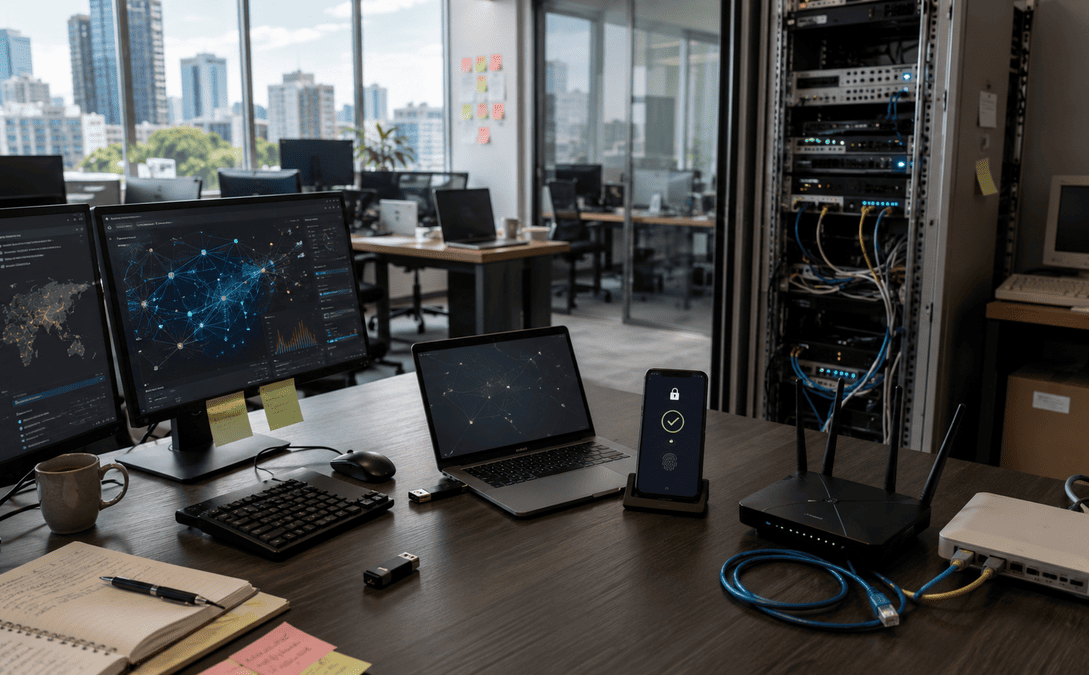
Businesses across Australia rely on technology more than ever, but with greater connectivity comes greater risk. Many cyber threats don’t announce themselves with flashing warning signs. Instead, they quietly exploit weak passwords, outdated software, unsecured devices, or unsuspecting employees before causing serious disruption.
If you’ve been searching for Cyber Security Services, you’re probably wondering whether your business is truly protected or if hidden risks are waiting to become expensive problems. This article explores the less obvious cyber threats that many businesses overlook, explains how professional Cyber Security Services help prevent them, and offers practical steps to improve your organisation’s security posture before an incident occurs.
Quick Overview
Need the highlights first?
- Many cyber attacks begin with small vulnerabilities that businesses don’t notice.
- Professional Cyber Security Services focus on prevention, monitoring, and rapid response.
- Cybercriminals target businesses of every size, not just large corporations.
- Employee awareness is just as important as firewalls and antivirus software.
- Investing in proactive security is usually far less expensive than recovering from a cyber attack.
Want to discover which hidden threats could be affecting your business? Keep reading.
Why Hidden Cyber Threats Are So Dangerous
Not every cyber attack begins with dramatic headlines or sophisticated hackers wearing hoodies in dimly lit rooms. (Hollywood has been remarkably committed to that image.)
Many successful attacks happen because of simple oversights:
- A forgotten administrator account
- An employee clicking a convincing phishing email
- Software that hasn’t been updated
- Weak passwords shared between staff
- Devices connected without proper security settings
These seemingly minor issues can create opportunities for cybercriminals to access sensitive information, interrupt business operations, or demand costly ransom payments.
That’s where professional Cyber Security Services become valuable. Rather than waiting for something to go wrong, they continuously identify and reduce risks before attackers can exploit them.
Hidden Threat #1: Phishing Emails
Phishing remains one of the most common entry points for cyber attacks.
Modern phishing emails often appear remarkably genuine, using company logos, familiar language, and urgent requests designed to encourage quick action.
Warning signs include:
- Unexpected invoice requests
- Password reset emails you didn’t request
- Fake Microsoft 365 or banking login pages
- Messages asking for urgent payments
Even experienced employees can occasionally be caught off guard.
Cyber Security Services help by combining email filtering, staff awareness training, and advanced threat detection to reduce the likelihood of successful phishing attempts.
Did You Know?
Many cyber incidents begin with a single employee clicking one malicious link. Technology helps, but informed employees remain one of the strongest layers of defence.
Hidden Threat #2: Outdated Software
Software updates are often delayed because they’re seen as inconvenient.
Unfortunately, cybercriminals know this too.
Older operating systems and applications may contain known security vulnerabilities that attackers actively search for.
Professional providers help businesses by:
- Monitoring software versions
- Applying security patches
- Managing updates
- Testing critical systems before deployment
Keeping systems updated significantly reduces unnecessary risk.
Hidden Threat #3: Weak Password Practices
Passwords continue to be one of the weakest links in cybersecurity.
Common problems include:
- Reusing passwords across multiple accounts
- Short or predictable passwords
- Sharing passwords between employees
- Never changing compromised credentials
Professional Cyber Security Services often recommend:
- Multi-factor authentication (MFA)
- Password managers
- Strong password policies
- Identity monitoring
A strong password alone isn’t enough anymore. Multiple layers of protection provide much stronger security.
Pro Tip
If your business still has accounts protected by “Company123” or a variation of the business name, now is an excellent time to make some changes. Cybercriminals appreciate convenience far more than you should.
Hidden Threat #4: Unsecured Remote Work
Remote and hybrid work have transformed the way many Australian businesses operate.
However, employees working from home may use:
- Personal devices
- Unsecured Wi-Fi networks
- Shared family computers
- Outdated software
Each creates additional security risks.
A reliable Cyber Security Services provider helps secure remote environments through:
- VPN solutions
- Device management
- Endpoint protection
- Secure cloud access
- Remote monitoring
This allows employees to remain productive without unnecessarily increasing business risk.
Hidden Threat #5: Insider Mistakes
Not every cyber incident involves malicious intent.
Simple human errors account for many security incidents.
Examples include:
- Accidentally emailing confidential files
- Uploading sensitive documents to unsecured platforms
- Losing work devices
- Misconfiguring cloud storage permissions
The right combination of security policies, staff education, monitoring, and access controls significantly reduces these risks.
Hidden Threat #6: Ransomware
Ransomware has become one of the most disruptive cyber threats affecting businesses worldwide.
Attackers encrypt files and demand payment for their release.
Even organisations with backups can experience:
- Operational downtime
- Customer disruption
- Financial losses
- Reputation damage
Professional Cyber Security Services help reduce ransomware risk through:
- Endpoint detection
- Network monitoring
- Backup management
- Threat intelligence
- Rapid incident response planning
The goal isn’t simply recovering quickly.
It’s preventing the attack from succeeding in the first place.
Hidden Threat #7: Lack of Continuous Monitoring
Many businesses believe installing antivirus software completes their cybersecurity journey.
Unfortunately, cyber threats don’t work office hours.
Continuous monitoring helps identify:
- Suspicious login attempts
- Unusual network behaviour
- Malware activity
- Failed authentication attempts
- Emerging vulnerabilities
Ongoing monitoring allows problems to be investigated before they escalate into major incidents.
Expert Insight
“The most effective cybersecurity strategy isn’t built around reacting to attacks. It’s built around making attacks far more difficult to succeed.”
That proactive mindset is what distinguishes comprehensive Cyber Security Services from basic IT support.
Quick Guide: Strengthening Your Business Security
Many businesses don’t realise how exposed they are until something unexpected happens. A proactive review of your systems today can prevent costly disruptions tomorrow.
Common Challenges
- Are staff receiving suspicious emails regularly?
- Has your business grown without updating its security measures?
- Do you know whether all devices are properly protected?
Practical Ways to Improve Security
Review User Access
Ensure employees only have access to the systems they genuinely need.
Enable Multi-Factor Authentication
Adding an extra verification step significantly reduces unauthorised access.
Keep Software Updated
Regular updates close known security vulnerabilities before attackers can exploit them.
Invest in Ongoing Monitoring
Continuous monitoring helps identify unusual activity early, allowing faster response when required.
Why It Works
Cybersecurity works best as an ongoing process rather than a one-time project. Combining technology, policies, and employee awareness creates multiple layers of protection that make successful attacks far less likely.
Cyber Security Health Check
Give yourself one point for every “Yes.”
- □ We regularly update all business software.
- □ Every employee uses multi-factor authentication.
- □ Staff receive cybersecurity awareness training.
- □ Business data is backed up and tested.
- □ We monitor systems for unusual activity.
- □ We have an incident response plan.
- □ We know who to contact if a cyber attack occurs.
Your Score
6-7: Excellent. Your business is taking cybersecurity seriously.
3-5: You’re on the right track, but there are opportunities to strengthen your defences.
0-2: Your business could be vulnerable to hidden cyber threats and would likely benefit from reviewing its current security measures.
Frequently Asked Questions
Are Cyber Security Services only for large businesses?
Not at all.
Small and medium-sized businesses are frequently targeted because attackers often assume they have fewer security controls in place.
How often should cybersecurity be reviewed?
Security should be reviewed regularly, particularly after:
- Business growth
- Staff changes
- New software deployments
- Significant technology upgrades
Can antivirus software protect against every threat?
No.
Antivirus remains important, but modern cybersecurity also includes monitoring, employee training, endpoint protection, email security, backups, identity management, and incident response planning.
What is the biggest cybersecurity risk for most businesses?
There’s no single answer, but phishing, weak passwords, outdated software, and human error consistently rank among the most common causes of successful cyber incidents.
How can employees help improve cybersecurity?
Simple daily habits make a significant difference:
- Think before clicking links.
- Report suspicious emails.
- Use strong passwords.
- Lock devices when unattended.
- Follow company security policies.
Are Cyber Security Services worth the investment?
For many businesses, yes.
Preventing one significant security incident can save far more than the ongoing cost of proactive protection, while also helping maintain customer trust and business continuity.
Conclusion
Cyber threats are constantly evolving, and many of the biggest risks are the ones businesses don’t immediately notice. From phishing emails and outdated software to ransomware and insider mistakes, hidden vulnerabilities can quickly become costly disruptions if left unaddressed. Professional Cyber Security Services provide more than just technical tools. They deliver ongoing monitoring, proactive risk management, employee education, and strategic guidance that help businesses stay one step ahead of emerging threats. By identifying weaknesses early and building multiple layers of defence, Australian organisations can protect their operations, safeguard customer data, and move forward with greater confidence in an increasingly connected digital world.