Owning a rental property comes with responsibilities that go far beyond collecting rent and arranging the occasional repair. While most landlords prepare for maintenance issues like leaking taps or damaged carpets, one risk is often overlooked until it becomes a costly surprise: methamphetamine contamination.
If you’ve been searching for Meth Testing & Decontamination information, you’re likely wondering how contamination occurs, why it matters, and what steps landlords should take to protect both their investment and future tenants. This guide is designed specifically for Australian property owners who want practical, easy-to-understand information without unnecessary technical jargon.
Whether you own a single investment property or manage multiple rentals, understanding Meth Testing & Decontamination can help you make informed decisions and reduce unnecessary financial risks.
Quick Overview
Here’s the short version:
- Meth contamination isn’t always visible and can remain long after a property has been vacated.
- Professional Meth Testing & Decontamination identifies contamination levels and restores affected properties where necessary.
- Landlords may benefit from testing after suspicious tenant activity, police investigations, or before purchasing certain properties.
- Early testing often prevents larger restoration costs later.
- A clean, safe property helps protect both tenants and your long-term investment.
Want to dive deeper? Keep reading to learn when testing makes sense and how the process works.
Why Landlords Should Understand Meth Contamination
Many people assume meth contamination only affects properties used as drug laboratories.
In reality, contamination can also occur in homes where methamphetamine has been regularly smoked or heavily used. Over time, chemical residues may settle on walls, ceilings, carpets, curtains, ventilation systems, and other household surfaces.
The challenge?
Unlike mould, water damage, or broken fixtures, meth residue is generally invisible.
A property may appear spotless while still requiring professional assessment.
This is why visual inspections alone cannot confirm whether a property is free from contamination.
Why Meth Testing & Decontamination Matters
Rental properties experience frequent tenant turnover.
Most tenants leave homes in excellent condition, but landlords occasionally inherit unexpected problems that aren’t immediately obvious.
Professional Meth Testing & Decontamination provides reassurance by helping determine whether contamination exists and whether remediation is required before new occupants move in.
Benefits include:
- Protecting future tenants
- Supporting property value
- Reducing unexpected repair costs
- Assisting with property management decisions
- Providing documented testing results where appropriate
Did You Know?
Meth residue can remain inside a property long after the activity that caused it has stopped. Because the contamination isn’t visible, specialist testing is generally required to accurately identify whether unsafe residue levels are present.
Signs a Rental Property May Need Testing
Testing isn’t necessary after every tenancy.
However, there are situations where landlords may consider professional assessment.
Some examples include:
- Unusual chemical odours inside the property
- Evidence of suspicious activity during tenancy
- Police attendance related to drug offences
- Heavy staining or unexplained surface damage
- Information received from neighbours or property managers
- Purchasing a property with an uncertain history
These signs don’t automatically mean contamination exists, but they may justify further investigation.
How Meth Testing & Decontamination Works
Although every property differs, the process generally follows several straightforward stages.
Step 1: Property Assessment
A qualified technician assesses the property and identifies appropriate testing locations.
Step 2: Sample Collection
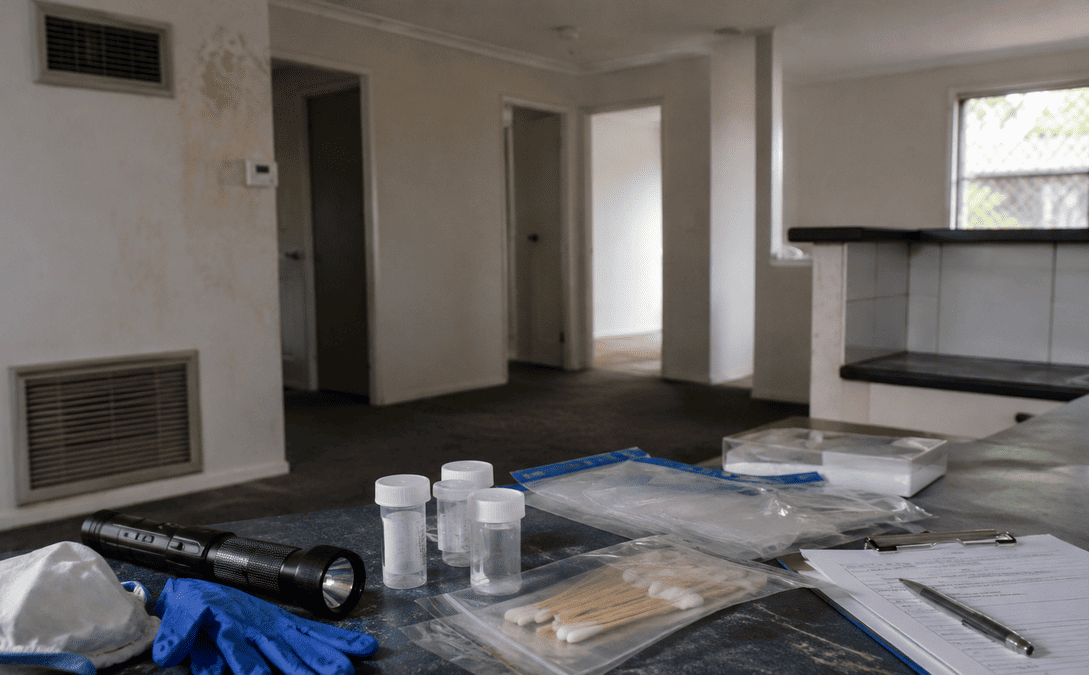
Surface samples are collected using approved testing methods from selected areas throughout the property.
Step 3: Laboratory Analysis
Samples are analysed to determine whether methamphetamine residue exceeds applicable guideline levels.
Step 4: Decontamination (If Required)
If contamination is confirmed, trained specialists clean affected surfaces using specialised methods designed to remove chemical residues.
Step 5: Verification Testing
Many remediation projects conclude with additional testing to confirm the property has been successfully cleaned.
DIY Cleaning Isn’t the Same as Decontamination
Many landlords naturally wonder whether standard cleaning is enough.
Unfortunately, ordinary household cleaning products aren’t designed to remove chemical contamination.
Painting over walls or replacing carpets may improve appearance, but these measures alone may not eliminate residue from multiple surfaces throughout the property.
Professional Meth Testing & Decontamination focuses on identifying and addressing contamination rather than simply hiding it.
Pro Tip
If you suspect contamination, avoid spending large amounts on cosmetic renovations before testing.
Professional testing first can help identify exactly what requires attention, potentially saving unnecessary renovation costs.
Who Should Consider Meth Testing?
Professional testing may be worthwhile for:
- Residential landlords
- Property investors
- Real estate agencies
- Property managers
- Home buyers
- Commercial property owners
Testing isn’t about assuming the worst.
It’s about reducing uncertainty before it becomes an expensive problem.
Quick Guide: Unsure Whether Your Rental Property Needs Testing?
Sometimes a tenancy ends with more questions than answers. Perhaps neighbours mentioned unusual activity, or the property simply doesn’t feel quite right despite looking clean. Rather than relying on guesswork, a structured approach can help.
Common Challenges
- Has the property’s history left you with unanswered questions?
- Are you preparing for new tenants but want extra peace of mind?
- Would hidden contamination affect future rental income?
Practical Ways to Respond
Arrange professional testing
Testing provides objective information rather than relying on assumptions.
Document property condition
Keep inspection reports and photographs before and after each tenancy.
Respond early
If concerns arise, acting sooner may reduce both costs and delays.
Use qualified specialists
Experienced professionals follow recognised testing and decontamination procedures suited to Australian properties.
Why It Works
Making decisions based on verified information reduces uncertainty and helps landlords protect both their investment and future occupants. A proactive approach is often simpler than dealing with unexpected complications later.
Quick Quiz: Should You Consider Meth Testing?
Answer Yes or No.
1. Has your property recently changed tenants?
☐ Yes
☐ No
2. Has suspicious activity ever been reported at the property?
☐ Yes
☐ No
3. Are you buying an older investment property with limited history?
☐ Yes
☐ No
4. Would documented testing give you greater confidence before renting again?
☐ Yes
☐ No
Your Results
Mostly Yes
Professional Meth Testing & Decontamination may be worth discussing with a qualified provider.
Mostly No
Your current risk may be lower, but understanding the process remains valuable should circumstances change.
Frequently Asked Questions
Is meth contamination visible?
Not usually.
Meth residue is generally invisible, which is why laboratory testing is commonly used to confirm whether contamination exists.
Does every rental property need meth testing?
No.
Testing is typically recommended when there are reasonable concerns about previous drug activity or when landlords want additional reassurance before re-letting or purchasing a property.
Can normal household cleaning remove meth residue?
In most situations, standard cleaning products are not designed to remove chemical contamination effectively.
Professional assessment helps determine the appropriate response.
How long does the testing process take?
Timeframes vary depending on property size and laboratory turnaround times, but testing is generally much faster than dealing with unexpected contamination after new tenants move in.
Is decontamination always required?
Not necessarily.
If testing shows contamination is below applicable guideline levels, extensive remediation may not be needed.
Why should landlords act early?
Early testing can:
- Identify issues before they worsen.
- Reduce delays between tenancies.
- Provide greater confidence when preparing the property for new occupants.
Conclusion
Being a landlord involves managing both visible and hidden risks, and meth contamination is one issue that deserves careful attention. While not every rental property requires testing, understanding when Meth Testing & Decontamination may be appropriate helps you make informed decisions that protect your investment and future tenants. Professional testing removes uncertainty, while proper decontamination can restore a property’s safety if contamination is confirmed. By staying proactive rather than reactive, Australian landlords can minimise unexpected costs, reduce downtime between tenancies, and maintain properties that are safe, compliant, and ready for their next occupants with greater confidence.