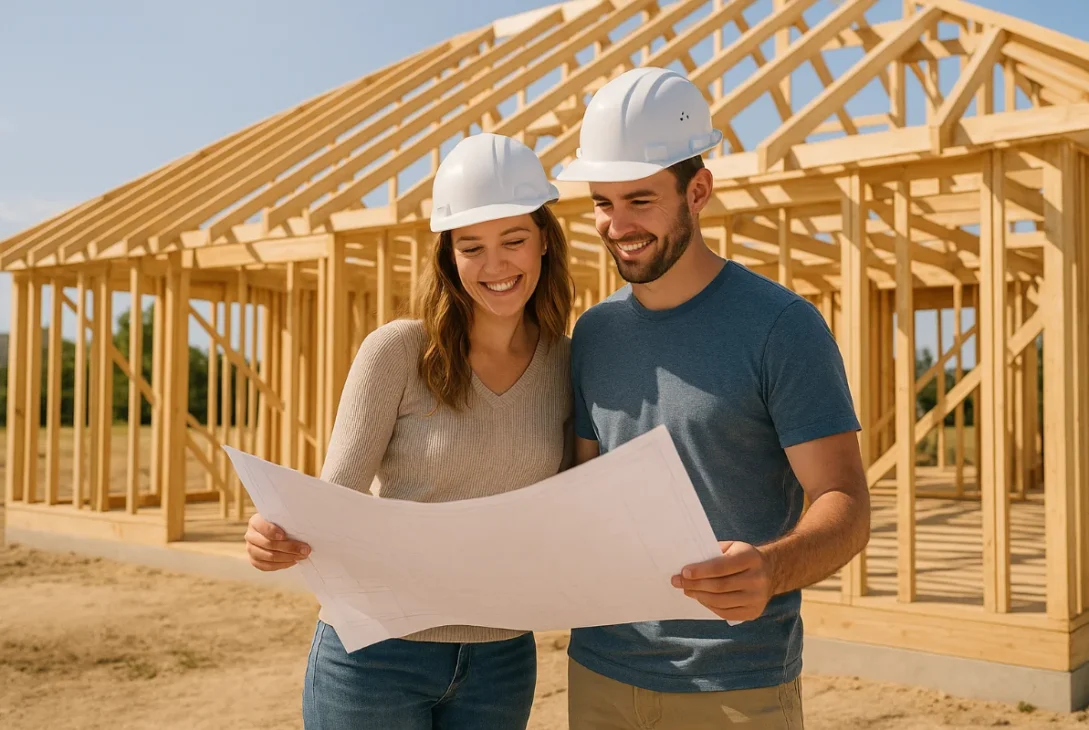
Dreaming of building your own home in Australia? Whether you’re picturing wide open spaces in the suburbs, a compact city build, or something eco-friendly by the coast — this guide is for you. Building a new home can feel overwhelming: approvals, budgets, bricks, trades, design choices… but it doesn’t have to be. This post will walk you through how to build a new home in Australia in 2025, step-by-step, even if you’d rather be planning your housewarming than memorising construction jargon.
At a Glance: Quick Overview
Snapshot Summary
- The cost to build a new home in Australia in 2025 varies widely — roughly A$1,600–$3,900 per square metre depending on region, design and finish levels. (Duo Tax Quantity Surveyors)
- Key steps: land & planning → design & approvals → builder selection & contract → construction phases → hand-over & final touches.
- Budgeting wisely means accounting not just for the build but for site prep, approvals, fixtures and landscaping.
- Want full details on each step? Keep reading.
1. Land & Site Preparation
Why it matters
Before you even see a frame go up, the land and site conditions will heavily influence cost, timeline and design. Industry sources show that sloping blocks, soil issues and city-edge locations can add significant expense. (Landhar Homes: Home Builder)
What to do
- Select the land carefully: Check zoning, orientation (sun/shade), access, slope and any bushfire/flood overlays.
- Budget for site works: Clearing, excavation, retaining walls, soil testing might add tens of thousands. Example: in Brisbane 2025 ranges mention $10,000–$50,000+ for site prep. (Kodiak)
- Plan for approvals & charges: Don’t forget council fees, utility connections, and possible government levies. Some reports show up to 40%+ of new build cost comes from taxes/charges. (News.com.au)
Pro Tip Box
Pro Tip: Before you sign on land, ask your builder for a preliminary cost estimate including site conditions. A “simple block” in one suburb may cost much more in another.
2. Design, Approvals & Documentation
Why it matters
Once you’ve got your site, the design and approval process sets the blueprint for your build. Making design decisions now saves cost blow-ups later.
What to do
- Define your brief: How many bedrooms? Single or double storey? Eco features? These early decisions drive cost and timeline.
- Get architectural/engineering drawings: These feed builder quotes and permit applications.
- Secure approvals: Building permit, planning permit, energy ratings, bushfire/flood if needed. The national regulatory framework like the National Construction Code (NCC) applies across Australia for minimum standards. (Wikipedia)
- Choose contract type: Lump sum fixed-price is advisable in 2025 given material/labour cost volatility.
Why it works
Getting this foundation right means fewer surprises. You’ll have clarity on design, scope and budget before major money flows.
3. Budgeting & Builder Selection
Why it matters
In 2025 Australia, construction costs are under pressure from labour shortages, material supply issues and varying site conditions. For example, estimates show standard builds $1,600–$3,900/m² depending on region and quality. (Duo Tax Quantity Surveyors)
What to do
- Obtain multiple builder quotes: Compare inclusions, exclusions, timeframe and payment terms. Guides suggest per m² pricing can mislead without clear inclusions. (ezfeasy.com.au)
- Check builder credentials: Licensing, recent work, references, and their process for variation/change orders.
- Include contingency: Factor in 10-15% extra to cover unexpected costs (site, finishes, delays). (Home Building Australia |)
- Finalise contract: Once you’re comfortable with price, scope and builder, sign the contract and lock in timeline.
Bold statement
A solid contract now = fewer budget nightmares later.
4. Construction Phases: From Ground to Roof
Why it matters
Understanding each stage helps you know what’s happening, when and what you should inspect/ask. Many builds get delayed or exceed budget due to gaps in this understanding.
Typical construction stages
- Foundation & slab: Excavation, footings, pouring slab.
- Frame & roof: Timber or steel frame, trusses, roofing, external cladding.
- Lock-up stage: External doors/windows in, home sealed.
- Services rough-in: Plumbing, electrical, HVAC, insulation.
- Fit-out & finishes: Kitchens, bathrooms, flooring, paint.
- External works: Driveway, landscaping, fencing. Example costs in Brisbane: $15k–$80k+ for external works alone. (Kodiak)
- Final inspection & hand-over: Snags fixed, certificate issued, keys handed over.
Why it works
By knowing the phases, you can engage, ask the right questions and monitor builder progress and workmanship.
5. Managing Costs & Quality During Build
Why it matters
Even with good planning, builds can drift in cost and time. Here’s how to keep it under control.
What to do
- Regular progress meetings: At each milestone check budget versus work done.
- Change order discipline: Minor changes add up. Lock in upgrades or defer non-essentials.
- Quality checks: Get your own independent inspection at lock-up stage.
- Hold back final payment: Until all snags are fixed and certificates issued.
Did You Know? Box
Did you know that labour shortages and materials cost increases are still major factors driving build cost variability in 2025? (simplycompare.com.au)
6. Hand-over, Move-in & Post-Build Tasks
Why it matters
The build ends when you move in—but your responsibilities don’t. Final touches and planning for living begin here.
What to do
- Final walkthrough: Inspect every room, ask for workmanship guarantee, ensure all manuals/warranties provided.
- Register warranties: Ensure builder, materials and appliances are registered with correct authorities.
- Landscaping & outdoor works: Many homeowners underestimate this. Budget for garden, fencing, paving etc.
- Maintenance plan: A new home still needs TLC — gutters, paint, HVAC service, pest checks.
- Celebrate! You built a home. 🎉
Why it works
You transition from “building” to “living” mode with confidence and fewer surprises.
Quick Guide
Intro:
You’re a homeowner in Australia ready to build a new home. You’ve got land (or nearly), but overwhelmed by steps ahead. Let’s simplify.
Common Challenges:
- Do you ask: “Where do I start?”
- Do you worry: “What will it really cost me?”
- Are you stuck: “How to keep this build from running away from budget or time?”
How to Solve It:
- Step 1 – Budget early: Use current cost benchmarks (~A$1,600-$3,900/m²) and add contingency.
- Step 2 – Hire early: Get a builder and designer on board before finalising major commitments.
- Step 3 – Monitor build: Use phases checklist, meet regularly, manage changes.
Why it works:
You’ve reduced overwhelm, defined clear steps and given yourself control. This approach gives structure but flexibility.
If you’re ready to move from “thinking about building” to “building smart”, pick your next step—contact a builder or architect this week and get your quote process started.
Interactive Quiz: What Kind of Build Are You?
Choose the answer that most reflects you. At the end, find your ideal build-focus.
| Question | A) Custom luxury build | B) Standard project home | C) Budget-conscious build |
|---|---|---|---|
| 1. My preferred home size is… | Large, unique, many features | Medium size, standard layout | Smaller size, efficient layout |
| 2. My budget per m² is… | Willing to pay premium for design & finish | Mid-range cost | Minimal cost, essential finish |
| 3. My site is… | Challenging (slope, design demands) | Standard suburban block | Simple site, low complications |
Results:
- Mostly A’s → Focus on Design & Custom Features. Expect longer timelines and higher budgets.
- Mostly B’s → Focus on Builder Selection & Cost Control. Stick with reputable builder packages.
- Mostly C’s → Focus on Efficient Size & Smart Inclusions. Keep build simple, finishes smart, contingency tight.
FAQs
Q1: What’s the typical cost to build a home in Australia in 2025?
Costs vary by region, design and finish. For example, per m² ranges of approximately A$1,600–$3,900 have been reported for various states. (Duo Tax Quantity Surveyors)
Q2: How long does it take to build a new home?
Typical total process (design + approvals + build) can be 9-18 months for many Australian homes. For more complex builds or multi-storey, longer. (Kodiak)
Q3: Are fixed-price contracts better?
In 2025’s environment, yes—fixed-price builds help manage material/labour cost volatility. But ensure the contract scope is crystal clear.
Q4: What hidden costs should I budget for?
Site prep, approvals, utility connections, landscaping, fencing, and contingencies. These can add 10-20%+ on top of basic build cost. (Hamilton Bardin)
Q5: Is it cheaper to buy an existing home instead of building?
Sometimes. Especially in regions where land/build costs are high. Check total cost of ownership, your lifestyle requirements and long-term value proposition.
Conclusion
Building a new home in Australia in 2025 doesn’t need to feel like navigating a minefield. If you start with a clear plan, realistic budget, experienced team, and a structured process, you’ll be far ahead of many. Walk through the steps: land → design → build → move-in. Monitor costs, make smart decisions and keep your end goal in sight: a home that’s uniquely yours and built to last. Your journey starts now.
Disclaimer
This post is for general informational purposes only and does not constitute personal building, financial, architectural or legal advice. Always consult licensed professionals for your specific circumstances.