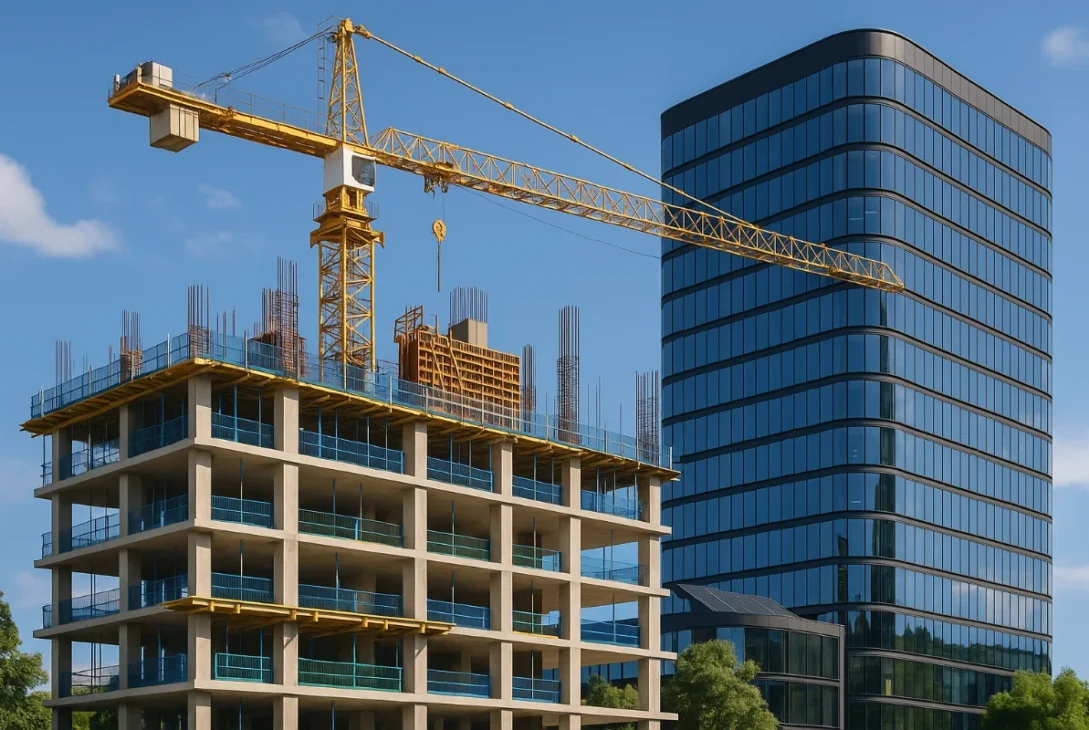
How Far We’ve Built — Literally
Australia’s skylines have transformed dramatically in the last few decades. From humble brick-and-timber homes to sleek, sustainable, and tech-driven buildings, our approach to construction has evolved just as quickly as our Wi-Fi speeds (well, almost).
Today, modern building techniques are reshaping not only how structures are built but also how they perform, age, and impact the environment. Whether you’re a homeowner, tradie, or developer, understanding these methods is vital for making smarter, future-ready decisions.
This guide explores the evolution of modern building techniques in Australia — from traditional craftsmanship to cutting-edge innovation — and how these changes are helping create a stronger, greener, and more efficient built environment.
Snapshot Summary: Key Takeaways
Here’s a quick overview of what this post covers:
- Modern building techniques improve sustainability, efficiency, and safety in construction.
- Australia is leading innovation in areas like modular homes, 3D printing, and smart materials.
- The rise of green building and digital construction is reshaping the industry.
- Builders, architects, and property owners all benefit from adopting these advancements.
- The future promises faster builds, smarter materials, and zero-emission construction.
Curious how Australia’s construction sector is redefining the future? Keep reading.
1. What Are Modern Building Techniques?
Modern building techniques refer to the innovative methods, materials, and technologies that improve the construction process — making it faster, safer, more efficient, and environmentally friendly.
While “modern” may sound futuristic, many of these techniques are already standard practice across Australian projects today.
Examples include:
- Prefabrication & modular construction
- Cross-laminated timber (CLT)
- 3D-printed building components
- Sustainable and recycled materials
- Smart home technology integration
- Building Information Modelling (BIM)
In short: Modern building techniques are the construction world’s version of upgrading from dial-up internet to fibre optic.
2. A Brief History: From Hammers to High-Tech
Once upon a time, Aussie homes were built almost entirely by hand — bricks laid, timber frames cut, and concrete mixed on-site. Construction was slow, labour-intensive, and weather-dependent.
Then came innovation:
- 1950s–1980s: Mass production and affordable housing booms.
- 1990s–2000s: Introduction of new materials like steel frames and insulation systems.
- 2010s onward: The age of digital design, modular building, and sustainability.
Today, the construction industry combines engineering precision, digital technology, and eco-awareness to meet growing demand — all while keeping up with stricter regulations and Australia’s unpredictable climate.
3. Top Modern Building Techniques Transforming Australia
Let’s look at the major innovations redefining how we build.
a) Prefabrication and Modular Construction
Prefab homes and modular buildings are assembled off-site in controlled environments, then transported and installed onsite.
Benefits:
- Faster build times (up to 50% quicker)
- Reduced waste
- Higher precision and quality control
Example: Modular school buildings in Victoria can be delivered in months, not years.
b) 3D Printing in Construction
Yes, printers are now building houses — layer by layer. 3D printing uses concrete or composite materials to create entire wall systems or components.
Why it matters:
- Lower labour costs
- Customisation flexibility
- Reduced waste
Fun fact: A 3D-printed home in NSW was recently completed in just three days — faster than most of us finish a renovation quote.
c) Sustainable & Recycled Materials
Sustainability is at the core of modern building techniques. Builders are now embracing recycled steel, reclaimed wood, and low-carbon concrete.
Pro Tip:
Look for Green Star and NABERS ratings — key certifications that highlight environmentally responsible design.
d) Cross-Laminated Timber (CLT)
CLT panels are made by layering timber boards in alternating directions. They’re strong, lightweight, and carbon-negative.
Did You Know?
CLT buildings can rival concrete structures in strength — and often outperform them in insulation.
e) Smart Building Systems
From energy-efficient HVAC systems to IoT sensors that track air quality and lighting, smart tech is redefining comfort and efficiency.
Example: Modern office towers in Sydney now use AI to automatically adjust energy use based on occupancy levels.
f) Digital Twins & BIM (Building Information Modelling)
These virtual models let architects and engineers visualise a building’s performance before a single brick is laid.
Benefits:
- Fewer design errors
- Easier collaboration
- Better maintenance planning post-construction
4. Quick Guide: How to Choose the Right Modern Technique
Situation
You’re planning to build a new home or commercial project and want to integrate modern techniques — but where do you start?
Common Challenges
- How do I know which method suits my budget?
- Will sustainable materials last as long as traditional ones?
- How do I find builders who actually know modern techniques?
How to Solve It
- Research local builders with experience in modular or sustainable builds.
- Request sustainability reports or building method comparisons.
- Balance innovation and practicality — not every project needs automation.
- Check council and compliance requirements.
Why It Works
This approach blends innovation with reality — ensuring your build is efficient, compliant, and tailored to your needs.
5. The Benefits of Modern Building Techniques
1. Faster Construction
Automation and prefabrication slash build times dramatically.
2. Cost Efficiency
Although some techniques require upfront investment, they reduce long-term costs via efficiency and durability.
3. Sustainability
Lower emissions, minimal waste, and energy-efficient materials benefit both your wallet and the planet.
4. Improved Safety
Off-site manufacturing and automation reduce onsite risks.
5. Quality and Consistency
Controlled environments and smart monitoring ensure uniform standards.
6. Challenges Facing Modern Building in Australia
Not everything’s smooth sailing. Despite the progress, a few challenges remain:
- High initial investment costs for tech adoption.
- Skills gap among builders not yet trained in modern methods.
- Regulatory lag — innovation often moves faster than local codes.
- Supply chain disruptions, especially for advanced materials.
Humour break: Sometimes, waiting for new materials to arrive feels like waiting for a tradie who said they’d come “first thing Monday.”
7. The Role of Sustainability and Green Design
Australia’s construction industry contributes roughly 18% of national carbon emissions.
Modern building techniques are helping turn this around through:
- Passive solar design for natural heating and cooling.
- Green roofs and walls that improve insulation.
- Recyclable materials that cut down on landfill waste.
Quote:
“Every sustainable building is an investment in our planet’s future — and a smart move for your property’s value.”
8. The Future of Modern Building Techniques in Australia
Here’s what’s on the horizon:
- AI-driven design tools that optimise layouts for energy and cost efficiency.
- Robotics in construction for precision assembly and risk reduction.
- Zero-emission construction sites powered by electric equipment.
- Advanced 3D-printed skyscrapers using recycled materials.
- Circular economy principles — where every component can be reused or repurposed.
The building sites of the future will look less like messy construction zones and more like tech labs with cranes.
9. Quick Interactive Quiz: How “Modern” Is Your Building Knowledge?
Q1. What’s one major advantage of modular construction?
A) It looks cooler
B) It’s faster and more efficient
C) It requires more coffee breaks
Q2. Which modern material helps reduce carbon footprint?
A) Recycled steel
B) Bubble wrap
C) Plastic paint
Q3. Which technology creates virtual building models?
A) BIM (Building Information Modelling)
B) GPS
C) Microsoft Paint
Answers: Q1 — B | Q2 — A | Q3 — A
FAQs
Q: Are modern building techniques more expensive?
Initially, yes — but they save money long-term through efficiency, durability, and lower maintenance costs.
Q: Do modern techniques comply with Australian building codes?
Absolutely. In fact, many innovations exceed NCC and sustainability standards.
Q: Can homeowners use modern techniques for renovations?
Yes! Prefabricated panels and modular extensions are becoming popular in home renovations too.
Q: Are sustainable materials readily available in Australia?
Yes — with suppliers increasingly offering eco-certified timber, recycled concrete, and solar-integrated roofing.
Q: Will robots replace tradies?
Not anytime soon — but they might make carrying 50kg bags of cement a little easier.
Conclusion
Modern building techniques are transforming Australia’s construction industry — making it smarter, greener, and more efficient than ever before. From modular designs to sustainable materials and AI-driven planning, innovation is redefining what’s possible in architecture and construction.
Whether you’re an architect, investor, or homeowner, embracing these methods isn’t just about keeping up with trends — it’s about building a better future, one project at a time.
And remember: while technology is reshaping how we build, the real foundation of progress is creativity, collaboration, and forward thinking.
Disclaimer
This article provides general information on modern building techniques in Australia and does not constitute professional or financial advice. Always consult qualified professionals before making building or investment decisions.